

Oropharyngeal cancer: tobacco, alcohol, HPV — and does diet (dairy, sugar, wheat) matter? Why it is rising in Japan, latest treatments and survival rates

PR This article contains affiliate links to Rakuten Ichiba, A8.net and Moshimo Affiliate. What is written here is based on public sources and papers such as the National Cancer Center Japan, the Ministry of Health, Labour and Welfare (MHLW), IARC (International Agency for Research on Cancer) and WCRF (World Cancer Research Fund), regardless of any advertising. This article is not a substitute for diagnosis or treatment. If you have symptoms that worry you, consult an otolaryngology / head and neck surgery clinic. The “See on Amazon.co.jp” and “See on Yahoo! Shopping” links are also affiliate links.
When you open your mouth wide, the area you can see at the back of the throat is the oropharynx. Cancer that starts here is not common: in Japan, a little over 4,000 people are diagnosed each year.
But oropharyngeal cancer has a feature that most other cancers do not. Two cancers with completely different causes are mixed together in the same place. One is caused by tobacco and alcohol. The other is caused by the same virus that causes cervical cancer (HPV, human papillomavirus). The two differ in who gets them, in the first symptom, and in how well they respond to treatment. And in Japan and abroad, it is mainly the latter that is increasing.
This article answers the following questions with figures from public statistics and papers.
- Where is the oropharynx, and why can a virus-related cancer start there?
- How many people are affected in Japan and worldwide? Is it increasing or decreasing?
- Are tobacco, alcohol and HPV the only causes? Do dairy, sugar, sweets, wheat and other dietary factors matter?
- What are the treatments, and what is the “cutting edge” as of October 2026? If HPV is the cause, can treatment be made lighter?
- What are the survival rates, and what can you do to prevent it?
Alcohol, tobacco and cancer in general are also covered in our article on alcohol types and cancer and our article on tobacco and lung cancer.
Conclusions
- Oropharyngeal cancer comes in two forms: one caused by HPV and one caused by tobacco and alcohol. About half of oropharyngeal cancers in Japan are HPV-positive, and that share has risen since the 2000s
- The number of patients in Japan is rising. In Japan’s National Cancer Registry, the number grew by about 20% over eight years, from 3,609 in 2016 to 4,307 in 2023, and the age-standardized incidence rate also rose. Over the same period, laryngeal cancer, which is strongly tied to tobacco, declined
- The only causes that evaluating bodies call “established” are HPV16, smoking and alcohol. For dairy, sugar (soft drinks and fruit juice) and wheat (cereals), WCRF’s verdict is “no conclusion possible.” The National Cancer Center Japan has not evaluated diet for head and neck cancer. Studies point both up and down, and are split
- Treatment centers on surgery, radiation and anticancer drugs (chemoradiotherapy). In February 2026, an immune checkpoint inhibitor (pembrolizumab) given before and after surgery was approved in Japan. However, making treatment lighter just because the cancer is HPV-positive is not yet standard. Every large trial of lighter treatment fell short of standard treatment
- Survival differs greatly depending on HPV status. In a reanalysis of a U.S. clinical trial, 3-year survival was 82.4% for HPV-positive and 57.1% for HPV-negative. In U.S. statistics, the 5-year relative survival rate is 74.4% overall
- Prevention is quitting smoking, drinking less, and the HPV vaccine. In Japan, the HPV vaccine for men is voluntary (paid out of pocket), and prevention of oropharyngeal cancer is not among its approved indications (it is in the U.S.). Making it routine for men was still undecided at the October 2026 deliberations
Items featured in this article
Following the points in the article, we introduce the items below.
| Who it is for | Item featured | Where |
|---|---|---|
| Want to know whether you are the type who flushes when drinking | Alcohol-metabolism genetic test kits | What if your face turns red when you drink? |
| Want to quit smoking | Smoking-cessation aids (nicotine patches and nicotine gum) | Quitting smoking and drinking less |
| Want to cut down on alcohol | Non-alcoholic drinks | Quitting smoking and drinking less |
| Dry mouth after treatment | Oral moisturizing gels | After-effects of treatment: dry mouth and swallowing |
| Chewing or swallowing is hard after treatment | Soft home-delivered meals (Wellness Dining) and swallowing-friendly frozen side dishes (Shokurakuzen) | After-effects of treatment: dry mouth and swallowing |
| Want to read the book behind your doctor’s explanation | Clinical Practice Guidelines for Head and Neck Cancer, 2025 edition | Treatment basics |
Where is the oropharynx?
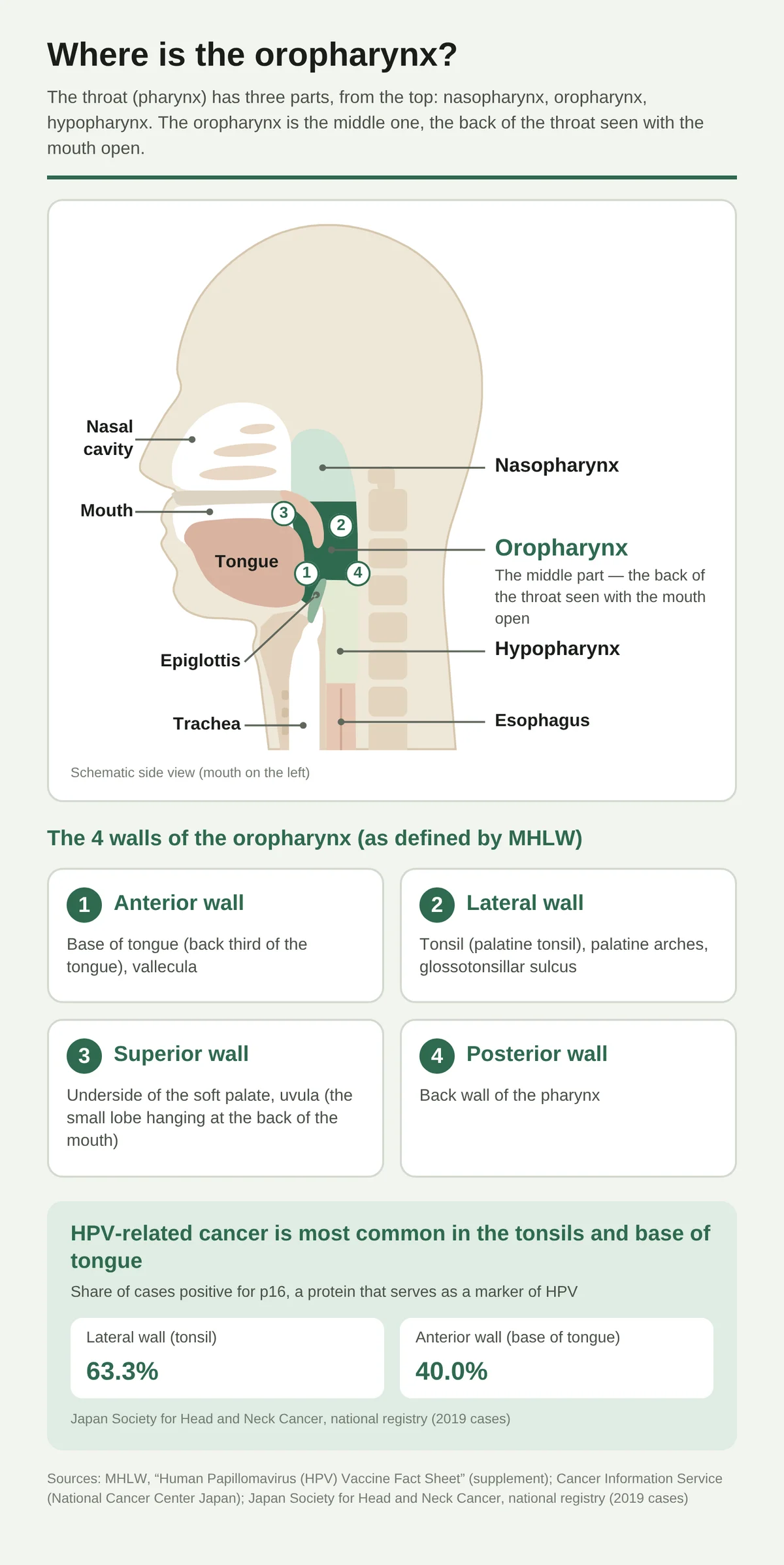
The throat (pharynx) is divided from top to bottom into three parts: the nasopharynx, oropharynx and hypopharynx. The oropharynx is the middle part, the area at the back that you can see when you open your mouth (Cancer Information Service). The MHLW’s HPV vaccine fact sheet divides the oropharynx into the following four walls.
| Part | What it includes |
|---|---|
| Anterior wall | Base of tongue (the back third of the tongue), vallecula |
| Lateral wall | Tonsil (palatine tonsil), palatoglossal arch, glossotonsillar sulcus |
| Superior wall | Underside of the soft palate, uvula (the “dangling” part at the back of the throat) |
| Posterior wall | The back wall of the pharynx |
Why do HPV cancers start in the tonsil and base of tongue?
It is known that HPV-related oropharyngeal cancer is most common in the tonsil and base of tongue. In the national registry of the Japan Society for Head and Neck Cancer (2019 cases), the share positive for p16, a protein that marks HPV, was 63.3% for the lateral wall (tonsil) and 40.0% for the anterior wall (base of tongue).
The reason is not clear, but the MHLW fact sheet lists the following explanations.
- Like the cervix, the tonsil has a structure that lets the virus reach the cells deep in the mucosa easily
- The membrane beneath the mucosa (the basement membrane) is interrupted in places
- The tonsil and base of tongue have deep pockets called “crypts,” where the virus can linger
About 90% of HPV-related oropharyngeal cancers are caused by HPV type 16 (same fact sheet).
Two kinds of oropharyngeal cancer: HPV-positive and HPV-negative
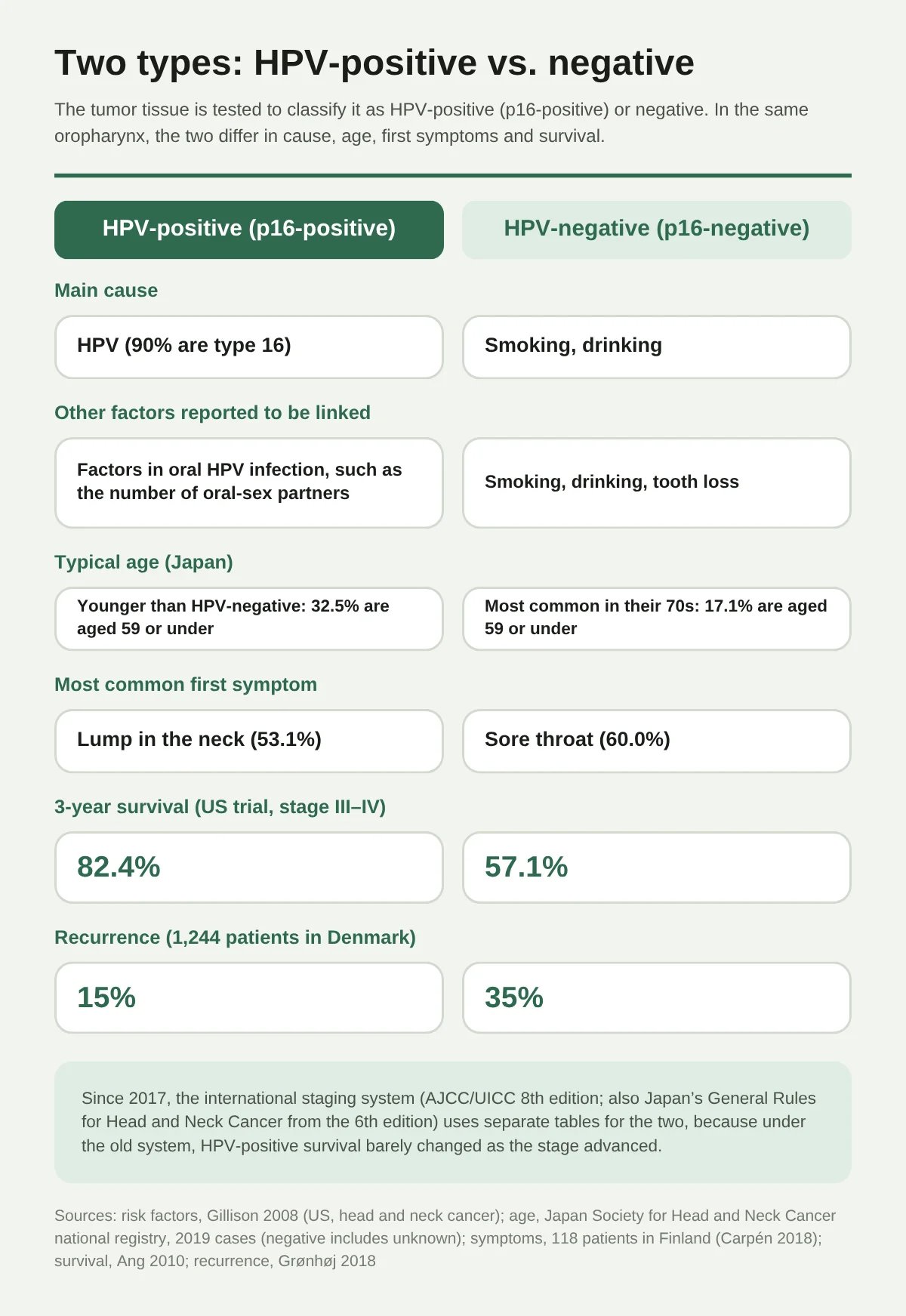
Oropharyngeal cancer is classified as HPV-positive (p16-positive) or HPV-negative by examining the cancer tissue. Since 2017, the international staging system has also used separate tables for the two (AJCC/UICC 8th edition; Japan’s “General Rules for Clinical Studies on Head and Neck Cancer” has done the same since its 6th edition). This is because, under the old classification, survival of HPV-positive cancer barely changed as the stage advanced, so stage could not separate the outlook.
| HPV-positive (p16-positive) | HPV-negative (p16-negative) | |
|---|---|---|
| Main cause | HPV (90% are type 16) | Smoking and alcohol |
| Reported related factors | Things tied to oral HPV infection, such as the number of oral-sex partners | Smoking, alcohol, and tooth loss |
| Common ages (Japan) | Younger than negative; 32.5% are 59 or younger | Most common in the 70s; 17.1% are 59 or younger |
| Most common first symptom | Lump in the neck (53.1%) | Sore throat (60.0%) |
| 3-year survival (U.S. trial, stages III–IV) | 82.4% | 57.1% |
| Recurrence (1,244 people in Denmark) | 15% | 35% |
Risk factors are from Gillison 2008 (U.S., head and neck cancer); ages from the Japan Society for Head and Neck Cancer national registry, 2019 cases (the negative group includes unknown); symptoms from 118 people in Finland (Carpén 2018); survival from Ang 2010; recurrence from Grønhøj 2018.
Is oropharyngeal cancer increasing?
Japan: up about 20% in eight years
In the National Cancer Center Japan’s National Cancer Registry, the number of people diagnosed with oropharyngeal cancer (base of tongue, tonsil, oropharynx) rose from 3,609 in 2016 to 4,307 in 2023. The age-standardized incidence rate, which removes the effect of population aging, also rose from 1.67 to 1.92 (per 100,000 people).
Meanwhile, among throat cancers, laryngeal cancer fell from 2.02 to 1.60. Laryngeal cancer is the head and neck cancer with the highest share explained by tobacco and alcohol, at 89% (INHANCE analysis, Hashibe 2009). The picture is that a cancer strongly tied to tobacco is declining while a virus-related cancer is increasing.
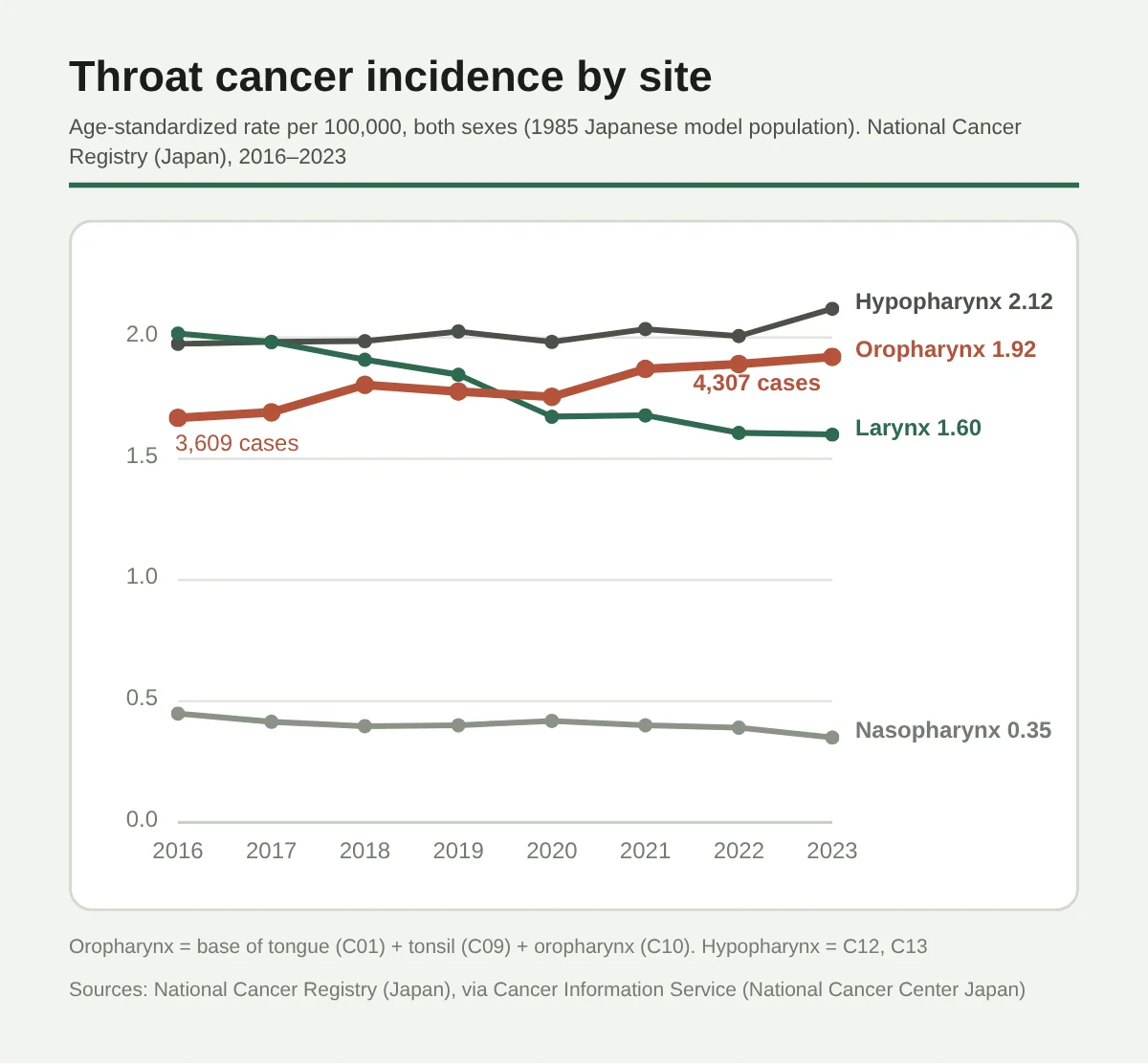
Japan’s National Cancer Registry, 2016–2023 (detailed sites in the Cancer Information Service’s “Cancer Statistics”). Both sexes. The dip in 2020 coincides with the period when fewer people sought care because of the COVID-19 pandemic.
- Breakdown by sex (2023): 3,467 men and 840 women. About four times as many men
- Deaths: 1,141 in 2020 (oropharynx C10; 1,300 for “cancers around the oropharynx,” which also includes the palate etc.) (MHLW HPV vaccine fact sheet)
- Over a longer period, a study combining 19 regional cancer registries found that the age-standardized incidence of oropharyngeal cancer from 1993 to 2015 rose by 5.0% per year in men and 7.6% per year in women (Kawakita 2022). Over the same period, oral cancer fell by 1.2% per year in men, and laryngeal cancer by 1.1% per year in men
- The share that is HPV-positive is also rising. At the University of Tokyo Hospital it went from 15.2% in 2000–2003 to 33.3% in 2008–2011 (Saito 2013). In a nationwide multicenter survey it went from 50% in 2009–2011 to 71% in 2014–2016 (stages III and IV; Nibu and Doi 2023). In the 2019 national registry, 47.9% of all oropharyngeal cancers were p16-positive
- A study from hospitals in northern Japan reported that the number of HPV-negative patients was almost unchanged, and the overall increase was equal to the increase in positive patients (Tsuchida 2024)
Reference: The MHLW’s HPV vaccine fact sheet gives 4,826 people in 2019 (3,760 men, 1,066 women) for “cancers around the oropharynx,” which includes the palate. The number changes depending on how the oropharynx is defined.
United States: overtook cervical cancer
In the United States, the incidence of HPV-positive oropharyngeal cancer rose 225% from 1988 to 2004, while HPV-negative cancer fell by half (Chaturvedi 2011). That paper predicted that “at this rate, HPV-positive oropharyngeal cancer will outnumber cervical cancer by 2020,” and in fact, in 2015, squamous cell carcinoma of the oropharynx (18,917 people) exceeded cervical cancer (11,788 people) (U.S. CDC; Van Dyne 2018).
In the latest U.S. CDC tally (average of 2018–2022), there were 22,585 oropharyngeal cancers a year, of which about 70% are estimated to be caused by HPV. The CDC calls oropharyngeal cancer “the most common HPV-associated cancer in men.”
Worldwide: about 108,000 a year. Japan is about the world average
IARC’s GLOBOCAN 2024 (published July 2026) estimates that 107,887 people worldwide are diagnosed with oropharyngeal cancer each year and 51,823 die from it (tonsil and oropharynx; base of tongue not included). In the 2022 edition, men had about 4.3 times the rate of women.
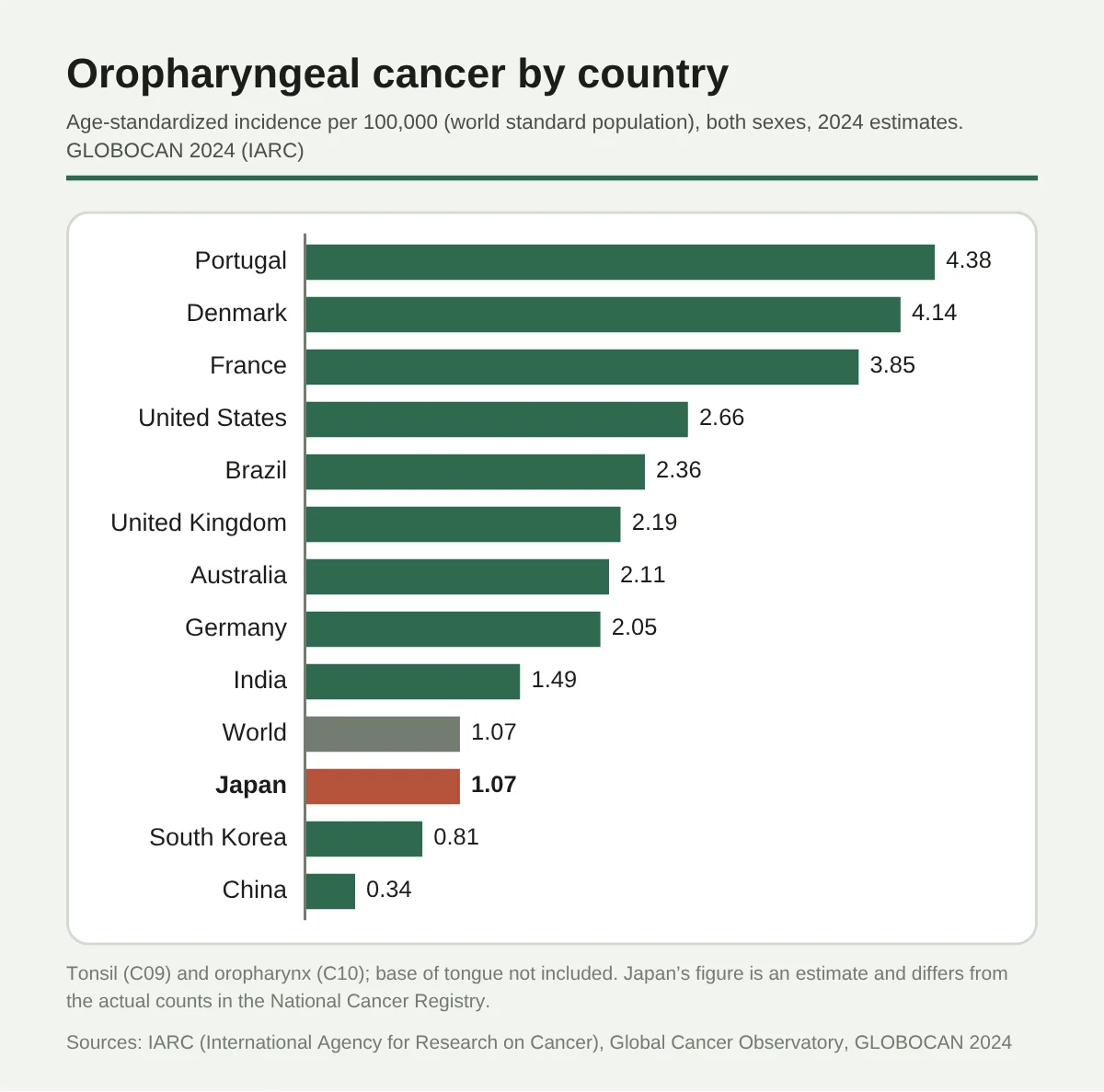
- Age-standardized incidence is high in Europe (Portugal, Denmark, France and others), the United States, Brazil and the United Kingdom. Japan (1.07) is about the same as the world average (1.07) and higher than South Korea and China
- A study comparing registries in 42 countries found that the 13 countries where oropharyngeal cancer in men rose by more than 3% per year in 1993–2012 included Japan, South Korea, China, the United States and the United Kingdom (Zumsteg 2023). Conversely, it was falling in men in France and Spain
- IARC’s projection, which includes only population aging and growth, puts the number of patients worldwide at about 160,000 in 2045 (+53% from 2022). Japan stays flat (−2%) because its population is shrinking. This projection does not include any increase due to HPV
Causes ranked by strength of evidence
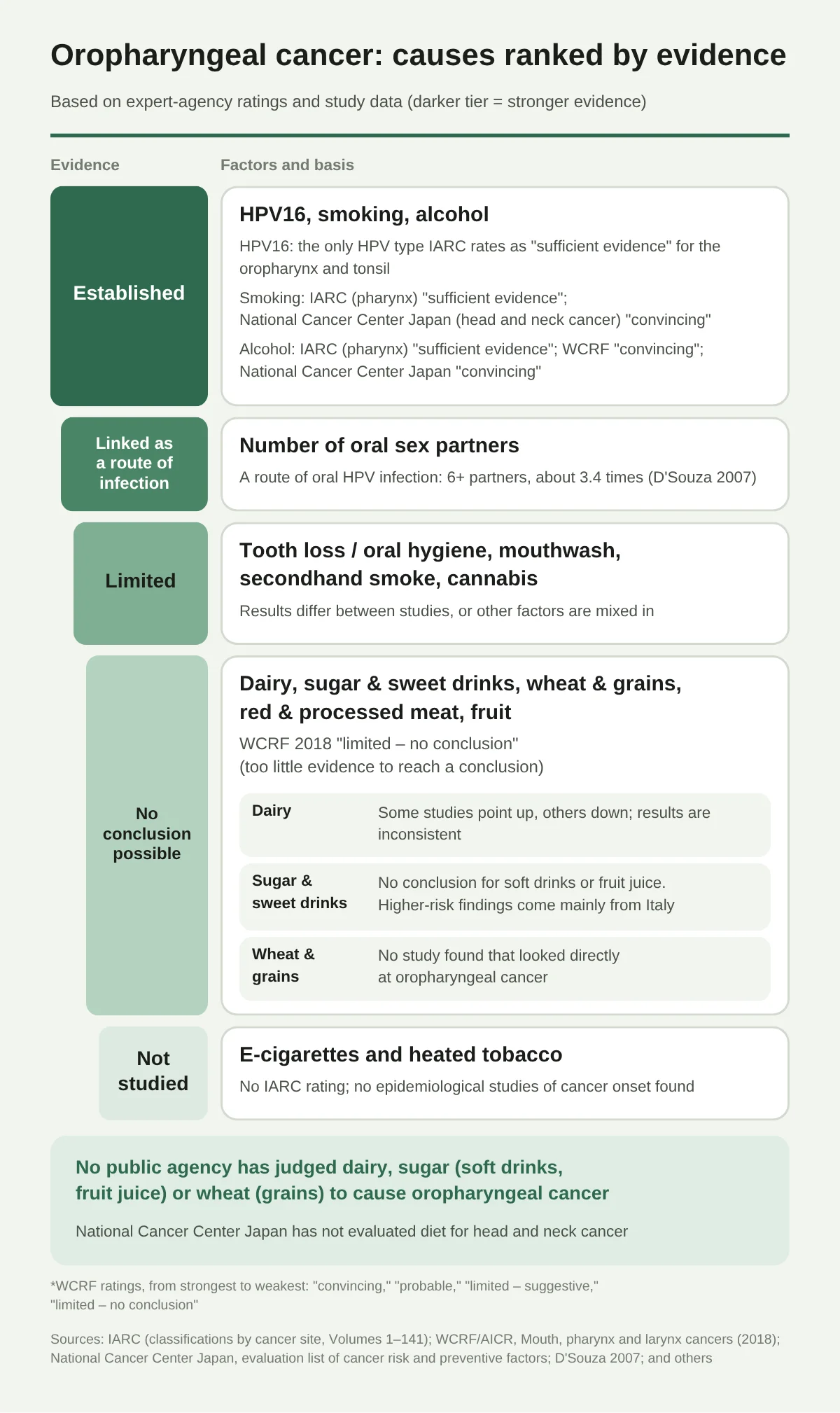
We lined up the things said to cause oropharyngeal cancer, using the verdicts of evaluating bodies and figures from research.
| Strength of evidence | Factor | Basis |
|---|---|---|
| Established | HPV16 | HPV16 is the only agent IARC rates as having “sufficient evidence” for the oropharynx and tonsil |
| Established | Smoking | IARC (pharynx): “sufficient evidence.” National Cancer Center Japan (head and neck cancer): “convincing” |
| Established | Alcohol | IARC (pharynx): “sufficient evidence.” WCRF: “convincing.” National Cancer Center Japan: “convincing” (since 2023) |
| Linked as a route | Number of oral-sex partners | About 3.4 times the risk at 6 or more (D’Souza 2007). As a route of oral HPV infection |
| Limited | Tooth loss and oral hygiene, mouthwash, secondhand smoke, cannabis | Results differ between studies, or the effects of other factors are mixed in (table below) |
| No conclusion possible | Dairy, sugar and sweet drinks, wheat and cereals, red and processed meat, fruit | WCRF 2018: “limited – no conclusion” |
| No research | E-cigarettes and heated tobacco | Not evaluated by IARC, and no epidemiological studies of cancer incidence found |
HPV: more than 10 years before the cancer
- In a large European follow-up study (EPIC), 34.8% of people who later developed oropharyngeal cancer had antibodies to HPV16 E6 in blood drawn before diagnosis, compared with 0.6% of those who did not. Positivity was seen more than 10 years before diagnosis (Kreimer 2013). A later study pooling nine follow-up studies in Europe, North America and Australia (743 patients) found that antibodies turned positive 6 to 28 years before diagnosis (Kreimer 2019)
- In a U.S. study, people with HPV16 in the mouth had 14.6 times the risk of oropharyngeal cancer. HPV16 was found in 72% of the cancers (D’Souza 2007)
- Oral HPV infection is not rare. In gargle samples from 435 healthy Japanese people, 5.7% were HPV-positive (8.3% of men, 2.6% of women) (Cho 2020). In the United States it was 11.5% of men and 3.2% of women (Sonawane 2017). Most people who are infected do not develop cancer
Tobacco and alcohol: multiplied, not added
- In an international pooled analysis of 17 studies (11,000 cases; INHANCE), the risk for people who both smoked and drank was greater than the product of the risks from smoking and drinking separately (Hashibe 2009). 72% of pharyngeal cancers could be explained by tobacco or alcohol
- In an analysis by the National Cancer Center Japan combining 11 Japanese follow-up studies (430,000 people), men who both smoked and drank had 2.34 times the risk of head and neck cancer compared with men who did neither (2026)
- Looking only at people who do not smoke, those who drank 3 or more drinks a day had about twice the risk of head and neck cancer, and the association was limited to the oropharynx, hypopharynx and larynx (Hashibe 2007)
What if your face turns red when you drink?
People who flush when they drink (those with a weak ALDH2 enzyme) tend to accumulate acetaldehyde, produced from alcohol, and are reported to have a higher risk of head and neck cancer (about 1.8 times in the meta-analysis by Boccia 2009). However, in a study of Japanese men by site, the effect of this constitution was strong for the hypopharynx, at 10 times, but there was no clear difference for the oral cavity and oropharynx (Asakage 2007; a small study of 96 patients). The same study found that people with the slow-metabolizing type of the other alcohol-metabolizing enzyme gene (ADH1B) had 4.24 times the risk of oral cavity and oropharyngeal cancer. A simple question asking whether you flush when you drink has also been reported to give almost the same result as a genetic test.
One way to check your own constitution genetically is a test kit in which you swab the lining of your mouth and mail the sample. What the result tells you is your metabolism type, not whether you will get cancer.
Other factors
| Factor | What is known |
|---|---|
| Tooth loss and oral hygiene | Fewer teeth lost, a dental visit once a year, and daily tooth brushing were each associated with about 0.8 times the risk of head and neck cancer (INHANCE, Hashim 2016). One study found an association only with HPV-negative cancer |
| Mouthwash | One analysis found 1.28 times the risk for the oropharynx (Boffetta 2016). However, the author wrote a paper on oral cancer under a contract with a mouthwash manufacturer and also served as a witness in related litigation (as stated in the paper) |
| Cannabis | 1.24 times for the oropharynx. After adjusting for HPV it became 0.99 times, and the association disappeared (Marks 2014) |
| Secondhand smoke | IARC (pharynx): “limited evidence.” National Cancer Center Japan: “insufficient data” |
| E-cigarettes and heated tobacco | No epidemiological studies of cancer incidence found. Cannot be called either safe or dangerous |
| Weakened immunity (HIV, organ transplant) | HPV-related cancers overall increase (Grulich 2007) |
| Body weight | WCRF says “body fatness probably raises the risk” for cancers of the mouth, pharynx and larynx combined, but looking at the oropharynx alone among people who do not smoke, there was no association (WCRF 2018, Table 14) |
Does diet matter? Dairy, sugar and wheat
Claims that “dairy, sugar and wheat cause cancer” are often heard about cancer in general. What about oropharyngeal cancer? We lined up the verdicts of evaluating bodies and the research, food by food.
Verdicts of evaluating bodies
WCRF (World Cancer Research Fund) gathers research from around the world to judge the relationship between diet, nutrition and physical activity and “cancers of the mouth, pharynx and larynx” (2018 edition). The National Cancer Center Japan also evaluates this, based on studies of Japanese people.
| Food | WCRF 2018 verdict | National Cancer Center Japan | What studies report |
|---|---|---|---|
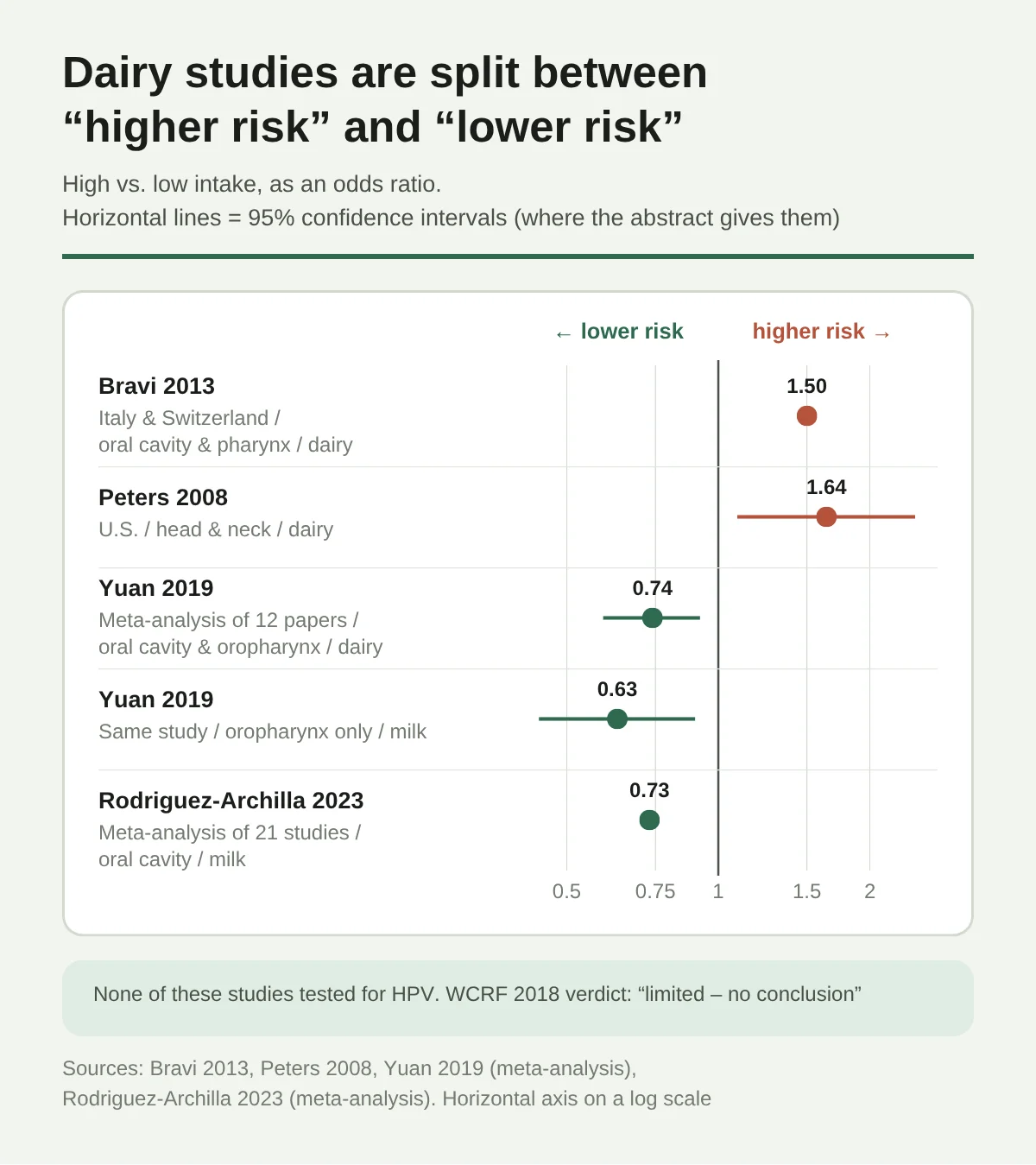
| Dairy | No conclusion possible | Not evaluated for head and neck cancer | Raises: 1.50 times in Italy and elsewhere (Bravi 2013), 1.64 times in the U.S. (Peters 2008). Lowers: 0.74 times in a meta-analysis (Yuan 2019), 0.73 times (Rodriguez-Archilla 2023, oral cancer) |
| Sugar and sweet drinks | No conclusion possible for either soft drinks or fruit juice | Not evaluated | 1.5 times for a diet that raises blood sugar easily (high GI), and 1.68 times for desserts (both Italian case-control studies). In studies using genetic data, there is little evidence that diabetes or blood sugar is a cause (Gormley 2023) |
| Wheat and cereals | No conclusion possible (for both cereals and dietary fiber) | Not evaluated | No studies directly examining wheat or refined grains and oropharyngeal cancer were found. 0.49 times in people who eat a lot of dietary fiber (INHANCE, Kawakita 2017) |
| Vegetables (non-starchy) | Limited, in the direction of lowering | Not evaluated | Vegetables 0.66 times, fruit 0.52 times (INHANCE, Chuang 2012). However, not significant in people who do not smoke or drink much |
| Fruit | No conclusion possible (downgraded from “probably lowers” in 2007) | Not evaluated | Same as above |
| Coffee | Limited, in the direction of lowering | Not evaluated | More than 4 cups a day: 0.58 times for the oropharynx and hypopharynx (INHANCE, Galeone 2010) |
| Red and processed meat | No conclusion possible | Not evaluated | Processed meat: 1.91 times for the oral cavity and oropharynx (Xu 2014 meta-analysis) |
| Salt | Not an item | Not evaluated (stomach cancer: “probable”) | 1.67 times for the oral cavity, pharynx and esophagus combined in Japan’s JACC study. Only 17 pharyngeal cases, a small number |
| Mate (South America) | Limited, in the direction of raising | — | Limited to the South American way of drinking it. Drinks hotter than 65°C are “probably carcinogenic to humans” per IARC (based on esophageal cancer) |
WCRF verdicts weaken in this order: convincing, probable, limited – suggestive, limited – no conclusion. Study ratios compare people who consume the most with those who consume the least.
There is no basis for saying “dairy, sugar and wheat are a cause”
- No public body has judged dairy, sugar (soft drinks and fruit juice) or wheat (cereals) to be a cause of oropharyngeal cancer. WCRF rates all of them “limited – no conclusion” (not enough evidence to reach a conclusion), and the National Cancer Center Japan has not evaluated diet for head and neck cancer
- For dairy there are studies pointing both “up” and “down,” and results do not agree
- Reports that sweets raise the risk are concentrated in Italian case-control studies
- For wheat, no studies directly examining its relationship to oropharyngeal cancer were found
Dairy, sugar and wheat themselves are covered in more detail in our article on dairy and Japanese people, our article on sugar types, our article on wheat flour and cancer and our article on the claim that wheat is bad for you.
Why do diet studies struggle to reach conclusions?
- Most studies rely on recall. Many diet studies are “case-control studies” that ask people with and without cancer about their past diet, which introduces recall error. WCRF does not make summaries of this type of study the core of its verdicts
- HPV was not measured. WCRF itself writes that “most studies of diet and cancers of the mouth, pharynx and larynx do not include HPV data.” More than half of oropharyngeal cancers today are HPV-positive, so older studies do not necessarily apply as they are
- The effects of tobacco and alcohol get mixed in. People who smoke and drink heavily tend to eat fewer vegetables and fruit. In fact, the association for fruit and vegetables was not significant among people who do not smoke or drink much
- There are few Japanese studies. The National Cancer Center Japan’s research group says that for dietary factors, “data are still insufficient for most foods and nutrients,” citing the small variation in Japanese diets and the difficulty of dietary surveys
There are almost no studies examining whether diet has different effects on HPV-positive and HPV-negative cancers.
Symptoms and how it is found
A Cancer Information Service booklet (created April 2026) lists the symptoms of oropharyngeal cancer as: discomfort when swallowing, a persistent sore throat, bleeding from the throat, difficulty opening the mouth wide, difficulty moving the tongue, ear pain, a lump at the back of the mouth, in the throat or in the neck, and changes in the voice. There may be no symptoms in the early stages.
- HPV-positive cancer is reported to be often found first as a lump in the neck (lymph node metastasis) rather than throat symptoms. Among 118 people in Finland, the most common first symptom in HPV-positive people was a lump in the neck (53.1%) (Carpén 2018)
- Wacky (of the comedy duo Penalty) noticed a lump in his neck in April 2020, which led to a diagnosis of early-stage oropharyngeal cancer, and his agency announced that he received chemoradiotherapy without surgery (Daily Sports, June 8, 2020). He has since also spoken about the after-effect of reduced saliva (same paper, June 4, 2026)
How diagnosis proceeds
- Look with a light through the mouth and feel with the fingers (including the lymph nodes in the neck)
- Endoscopy through the nose or mouth. In oropharyngeal cancer, esophageal and other cancers are sometimes found at the same time, so a gastroscopy to check for overlapping cancers is recommended
- Take tissue and examine it (biopsy). p16 staining is used to decide whether it is HPV-positive
- CT, MRI, ultrasound and PET to see how far it has spread
There is no screening
There is no established screening for oropharyngeal cancer. It is not among the cancer screenings the government recommends (stomach, colorectal, lung, breast, cervical). The U.S. Preventive Services Task Force also says that for oral cancer screening in people without symptoms, “the evidence is insufficient to weigh benefits and harms.” Methods that test blood for HPV antibodies or genes are at the research stage.
Treatment basics
Japan’s treatment guide is the “Clinical Practice Guidelines for Head and Neck Cancer, 2025 edition” (Japan Society for Head and Neck Cancer, June 2025). Based on this edition, the Cancer Information Service booklet says the following.
- Treatment is decided by the location and extent of the cancer and whether it has spread, and also by whether you want to preserve swallowing and voice function
- Comparing surgery with non-surgical treatment (radiation and chemoradiotherapy), it is not yet known which is better
- Treatment choice does not change depending on whether the cancer is p16-positive or negative
| Treatment | What it involves | Status in Japan |
|---|---|---|
| Surgery through the mouth | Instruments or an endoscope are put in through the mouth to cut out the cancer (TOVS, ELPS, etc.). TORS using a robot (da Vinci) is also used | Endoscopic surgery was covered by insurance in 2020 and robotic surgery in April 2022. Often possible for early cancers (T1, T2) |
| Surgery on neck lymph nodes | If there is spread, the lymph nodes are removed (neck dissection) | Standard |
| Radiation | IMRT (intensity-modulated radiation therapy) is recommended. 33–35 sessions (6–7 weeks) | Standard |
| Chemoradiotherapy | Radiation combined with cisplatin | Standard. For advanced cancer, or when the risk of recurrence after surgery is high |
| Immune checkpoint inhibitors | Nivolumab (2017), pembrolizumab (2019) | Recurrent or metastatic cancer |
| Pembrolizumab before and after surgery | 2 doses before surgery and 15 after | Approved in February 2026 (locally advanced head and neck cancer) |
| Photoimmunotherapy and boron neutron capture therapy (BNCT) | Explained in “The cutting edge of treatment” below | Unresectable locally advanced or recurrent cancer |
After-effects of treatment: dry mouth and swallowing
According to the Cancer Information Service booklet, with radiation therapy, mouth sores, throat inflammation, reduced saliva and loss of taste begin in weeks 1–2 after the start, and are worst about 7–10 days after the last session. Mucosal inflammation settles in 2 weeks to 1 month, but saliva, taste and hoarseness take time to return, and may not fully recover. Several years later, difficulty swallowing, difficulty opening the mouth and more cavities may appear.
- With IMRT that avoids the parotid glands, which make saliva, moderate-or-worse dry mouth at 1 year fell from 74% to 38% (UK trial PARSPORT)
- With IMRT that limits the dose to the swallowing muscles, swallowing-related quality of life at 1 year improved (UK trial DARS)
For dry mouth, gels that moisturize the inside of the mouth are used. If you choke easily or find chewing difficult, there are also meals whose softness you can choose by level. Before using them, consult the doctor, dentist and registered dietitian at the hospital where you are being treated.
If it is HPV-positive, can treatment be made lighter?
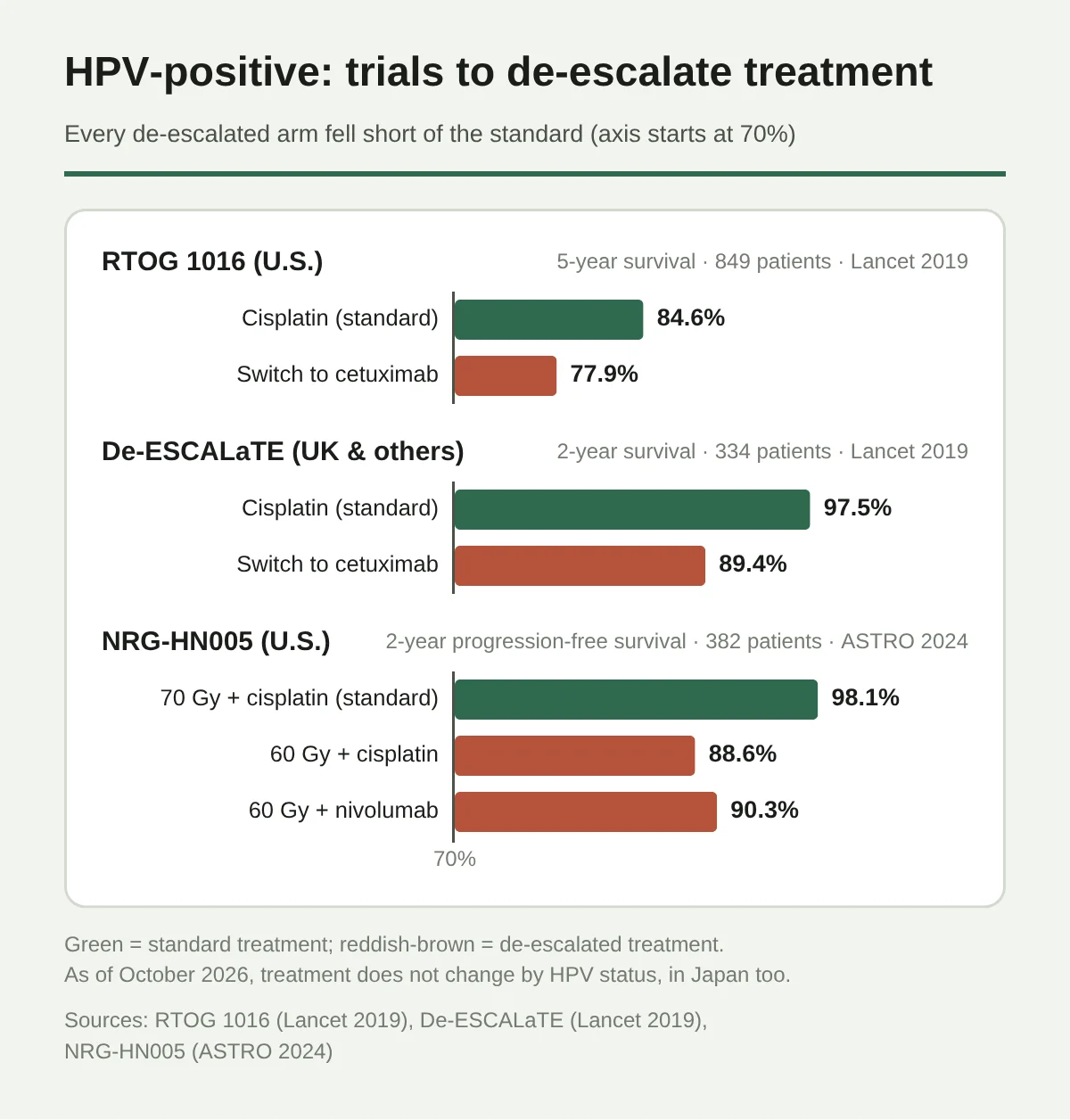
HPV-positive oropharyngeal cancer is easier to cure, so trials in the United States and United Kingdom have asked one after another whether the radiation dose or anticancer drugs could be reduced to lessen after-effects. The results are as follows.
| Trial | What was lightened | Result |
|---|---|---|
| RTOG 1016 (U.S. and Canada, 849 people) | Replace cisplatin with cetuximab | 5-year survival 77.9% (standard 84.6%). Non-inferiority not shown, and side effects were not reduced |
| De-ESCALaTE (UK and others, 334 people) | Same | 2-year survival 89.4% (standard 97.5%). Recurrence 16.1% (standard 6.0%) |
| NRG-HN005 (U.S., 382 people) | Radiation reduced from 70 to 60 Gy. One arm also replaced cisplatin with nivolumab | 2-year progression-free survival 88.6% and 90.3% (standard 98.1%). Non-inferiority not shown for either; stopped early |
- In U.S. national data (14,869 people, 2026), 3-year survival for people who had their radiation dose reduced outside of trials was 82.1%, lower than the standard 88.9%, and the paper says “do not copy this outside of trials”
- Research continues in two directions: reducing radiation after surgery (U.S. E3311 and MC1675, UK PATHOS), and using how fast cancer-derived HPV DNA falls in the blood to choose who gets lighter treatment
- The booklet based on Japan’s guidelines (2025 edition) also says treatment choice does not change depending on whether the cancer is p16-positive or negative
The cutting edge of treatment (as of October 2026)
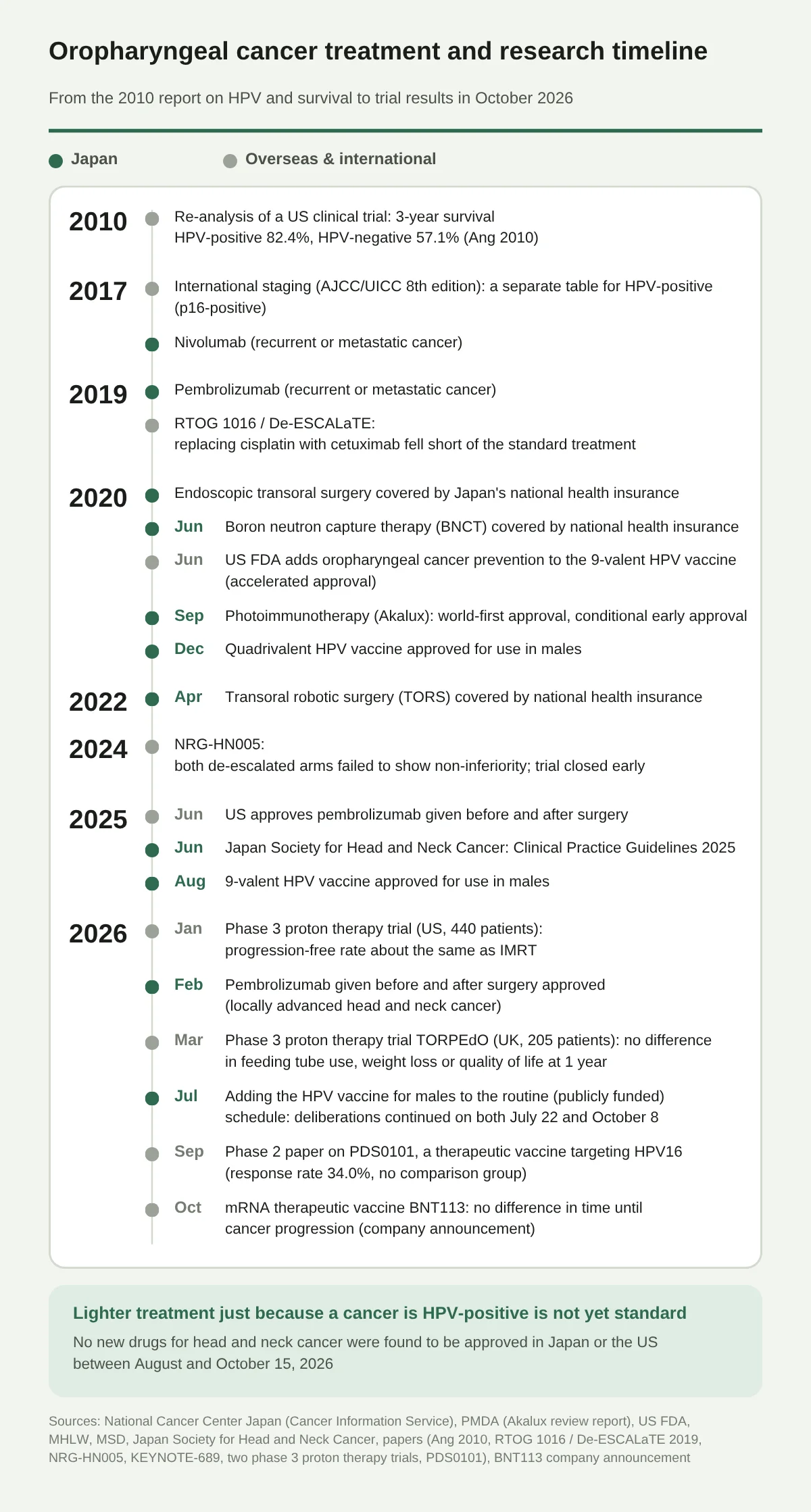
| Treatment / test | Japan | United States | What it is |
|---|---|---|---|
| Pembrolizumab before and after surgery (KEYNOTE-689) | Approved February 2026 | Approved June 2025 | 3-year event-free survival 58.2% (surgery alone 44.9%; PD-L1 marker CPS 1 or higher). For HPV-positive oropharyngeal cancer, only stage III T4 was eligible |
| Photoimmunotherapy (Akalux + laser) | Conditionally approved September 2020 (world first), covered by insurance | Not approved | Unresectable locally advanced or locally recurrent head and neck cancer |
| Robotic surgery (TORS) | Covered by insurance April 2022 | Widespread | Surgery through the mouth |
| Boron neutron capture therapy (BNCT) | Covered by insurance June 2020 | — | Unresectable locally advanced or locally recurrent head and neck cancer |
| Proton therapy | Squamous cell carcinoma of the oropharynx is not covered by insurance (same after the fiscal 2026 revision) | Two large trials in 2026 (results split) | Explained below |
| Blood HPV DNA test (ctHPVDNA) | Not approved or covered by insurance | Covered by Medicare (public insurance for older adults) | Research on watching for recurrence after treatment |
| Therapeutic vaccines targeting HPV | No clinical trials | No success in phase 3 | Explained below |
Photoimmunotherapy (head and neck Aluminox treatment)
This treatment uses “Akalux,” in which a light-sensitive dye is attached to a drug (cetuximab) that binds to a protein on the surface of cancer cells called EGFR. After it is given by drip, a dedicated laser light is shone on the area to destroy the cancer cells. Japan approved it first in the world, in September 2020.
- The approval was a “conditional early approval” based on small trials (39 people abroad and 3 in Japan), and a phase 3 trial to confirm the effect (ECLIPSE, Japan, U.S. and Taiwan) is ongoing. As of October 2026, no announcement was found that the condition has been lifted or the eligible population widened
- In a multicenter study of 40 people in Japan, the share whose cancer shrank (response rate) was 75.0%. Grade 3 or higher side effects occurred in 17.5%, and swelling of the throat lining (laryngeal edema) occurred in 42.5% (August 2025)
- An August 2026 paper analyzing 227 reports of side effects in Japan also found laryngeal edema to be the most common
- It is for unresectable locally advanced or recurrent cancer, and is not standard first-line treatment
Proton therapy: two trials in 2026
- U.S. phase 3 (440 people, Lancet, January 2026): the share with no progression was about the same as IMRT, and 5-year survival was 90.9% with protons and 81.0% with IMRT. Severe swallowing impairment was 31% vs. 49%
- UK phase 3 TORPEdO (205 people, Lancet, March 2026): no difference in feeding tube use, weight loss or quality of life at 1 year
- In Japan, insurance coverage for proton and carbon-ion therapy applies to “malignant head and neck tumors (excluding squamous cell carcinoma of the oral cavity, pharynx and larynx),” so squamous cell carcinoma, which makes up most oropharyngeal cancers, is not covered
Therapeutic vaccines and blood tests
- PDS0101, a therapeutic vaccine targeting HPV16, combined with pembrolizumab (phase 2, 53 people) was reported to have a response rate of 34.0% (JAMA Oncology, September 2026). The trial had no comparison group, and the phase 3 has temporarily paused enrollment because of a change in plan
- BNT113, an mRNA therapeutic vaccine, combined with pembrolizumab (phase 2/3), was announced by the company on October 13, 2026 to show “no difference in time until the cancer progressed.” Evaluation of survival continues
- A test that reads HPV genes in blood (HPV-DeepSeek) was reported to have 99% sensitivity and specificity in 235 people with HPV-related cancers at 9 sites (August 2026). It is at the research stage
Developments from August to October 2026
| When | What happened |
|---|---|
| July 30 | Subcutaneous amivantamab, which targets EGFR and MET, was given priority review by the U.S. FDA (head and neck cancer unrelated to HPV, second-line and later). Not yet approved |
| August | Analysis of 227 side-effect reports for photoimmunotherapy; paper on the blood HPV gene test HPV-DeepSeek |
| September 17 | Paper on the phase 2 trial of PDS0101 (JAMA Oncology) |
| September 26–30 | American Society for Radiation Oncology (ASTRO 2026). Interim results of a trial reducing radiation based on how fast blood HPV DNA falls, and others |
| October 13 | BNT113 phase 2/3: no difference in time until the cancer progressed (company announcement) |
From August through October 15, no newly approved drugs for head and neck cancer were found in either Japan or the United States (head and neck cancer also does not appear in the U.S. FDA’s list of oncology approvals for July–September).
Note The Cancer Information Service says that the only immunotherapies proven effective for oropharyngeal cancer are immune checkpoint inhibitors, and that caution is needed with immunotherapies offered as self-pay (non-insured) treatment.
What are the survival rates?
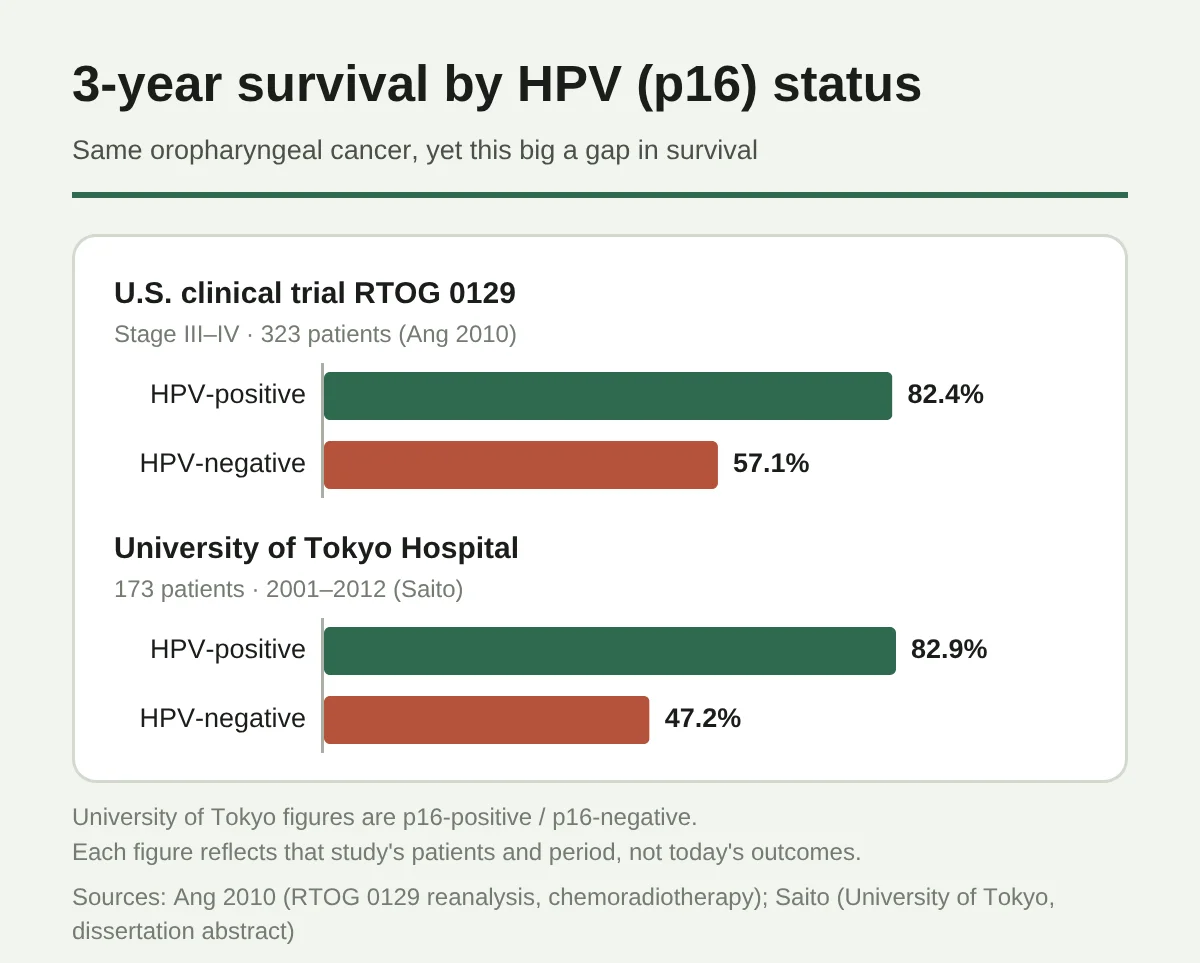
- In a reanalysis of a U.S. clinical trial (stages III and IV, chemoradiotherapy, 323 people), 3-year survival was 82.4% for HPV-positive and 57.1% for HPV-negative. Even after matching for age and stage, HPV-positive people had a 58% lower risk of death, and the longer the smoking history, the higher the risk (Ang 2010)
- Among 173 people at the University of Tokyo Hospital too, 3-year survival was 82.9% for p16-positive and 47.2% for negative (Saito)
- The 5-year relative survival rate in U.S. statistics (SEER, tonsil and oropharynx) is 74.4%. For “localized” (the cancer has stayed in place) it is 85.5%, for “regional” (spread to lymph nodes etc.) 79.0%, and for “distant” (metastasized far away) 37.6%. A feature is that survival is high even though 72% are already “regional” at diagnosis. However, the American Cancer Society cautions that “these numbers do not take HPV status into account”
- In Japan, no public 5-year survival rate for oropharyngeal cancer alone has been published. Japan’s National Cancer Registry (2016 diagnoses) gives only a combined figure for “oral cavity and pharynx” (59.8%), which cannot be used as a value for the oropharynx
Recurrence and a “second cancer”
- Recurrence was 15% for HPV-positive and 35% for HPV-negative among 1,244 people in Denmark (Grønhøj 2018). Recurrence after surgery and cancer deaths peaked in the second year after surgery (2026 paper)
- People with oropharyngeal cancer are known to be prone to a second cancer (multiple primary cancers), such as esophageal cancer. Among 150 people at the University of Tokyo Hospital, 14% were found at the same time and 20.7% were found later, and the most common was esophageal cancer. Alcohol and HPV-negative status were involved (Saito 2014)
What you can do to prevent it
Quitting smoking and drinking less
Smoking and alcohol are the biggest causes of HPV-negative oropharyngeal cancer, and the two multiply when combined. Even in HPV-positive cancer, a longer smoking history is reported to lower survival (Ang 2010).
HPV vaccine
- Evidence that it reduces oral HPV infection: In a trial of 7,466 women in Costa Rica, vaccinated women had 93.3% fewer oral HPV16/18 infections after 4 years (Herrero 2013). A U.S. survey also found 88.2% fewer vaccine-type oral HPV infections among vaccinated people (Chaturvedi 2018)
- Evidence that it reduces cancer itself is so far only from observational studies. A U.S. electronic health records study reported 0.087 times the oropharyngeal cancer in vaccinated people, but it is a retrospective study with few patients (2026)
- In June 2020, the U.S. FDA added “prevention of oropharyngeal and other head and neck cancers” to the 9-valent vaccine (Gardasil 9) under accelerated approval. The basis was its effect in preventing anal and genital lesions, and confirmatory trials continue
Situation in Japan (as of October 15, 2026):
| Item | Status |
|---|---|
| Women | Routine (publicly funded) vaccination (the age group from 6th grade of elementary school to 1st year of high school) |
| Men | Voluntary vaccination (entirely out of pocket). The quadrivalent vaccine was approved for men in December 2020 and the 9-valent in August 2025. Approved indications are anal cancer and genital warts (condyloma acuminatum); oropharyngeal cancer is not included |
| Routine vaccination for men | Deliberation continued at both the July 22, 2026 subcommittee and the October 8 Immunization Basic Policy Committee |
| Local subsidies | The Tokyo Metropolitan Government subsidizes programs in which wards and municipalities help pay for vaccination of men (since fiscal 2024) |
Many studies of HPV vaccines and oral HPV infection involved funding or staff from the vaccine manufacturers (in Herrero 2013, the manufacturer supplied the vaccine).
Common questions
Can it be passed on by kissing?
In a study of 210 male U.S. college students, the number of open-mouth kissing partners was associated with oral HPV infection (D’Souza 2009). However, this is an association with HPV infection, not a study of association with cancer.
Can cervical cancer screening or a blood test detect it?
No. There is no established screening for oropharyngeal cancer, and it is not something found by tumor markers (our article on tumor markers). If a lump in the neck, throat discomfort or pain, ear pain, or difficulty swallowing persists, consult an otolaryngologist.
Do young people get it too?
In the national registry of the Japan Society for Head and Neck Cancer (2019 cases, 2,322 people), people in their 60s and 70s are the main group. However, HPV-positive patients are younger than HPV-negative ones, with one in three aged 59 or younger.
Items featured in this article (summary)
Here is a recap of the items featured in the article. The reasons and ingredients are written in the respective sections.
| Item featured | Where to buy |
|---|---|
| ビズジーン アルコール分解型判定キット(VGAL-01) (Visgene alcohol-metabolism type test kit, VGAL-01) | See on Rakuten (ビズジーン) PR See on Amazon.co.jp PR See on Yahoo! Shopping PR |
| ハーセリーズ アルコール感受性遺伝子検査キット (Herseries alcohol sensitivity genetic test kit) | 『アルコール感受性遺伝子分析キット』 PR |
| 頭頸部癌診療ガイドライン 2025年版(日本頭頸部癌学会 編) (Clinical Practice Guidelines for Head and Neck Cancer, 2025 edition, edited by the Japan Society for Head and Neck Cancer) | See on Rakuten (楽天ブックス) PR See on Amazon.co.jp PR See on Yahoo! Shopping PR |
| バイオティーン オーラルバランスジェル 42g (Biotene Oral Balance Gel, 42 g) | See on Rakuten (マツモトキヨシ) PR See on Amazon.co.jp PR See on Yahoo! Shopping PR |
| ピジョン ハビナース クリンスマイル 口腔保湿ジェル 60g (Pigeon Habinurse Clean Smile oral moisturizing gel, 60 g) | See on Rakuten (サンドラッグ) PR See on Yahoo! Shopping PR |
| ウェルネスダイニング やわらか宅配食 (Wellness Dining soft home-delivered meals) |  |
| 食楽膳(SOMPOケアの冷凍おかず宅配) (Shokurakuzen, frozen side-dish delivery from SOMPO Care) | 管理栄養士監修、嚥下対応の冷凍惣菜を自宅へ【食楽膳】 PR |
| ワタミの宅食ダイレクト 介護食 (Watami no Takushoku Direct care meals) | “冷凍惣菜”をご自宅まで宅配便でお届け!【ワタミの宅食ダイレクト】 PR |
| ニコチネル パッチ20(14枚) (Nicotinell Patch 20, 14 patches) | See on Rakuten (サンドラッグ) PR See on Amazon.co.jp PR See on Yahoo! Shopping PR |
| ニコレット(96個) (Nicorette, 96 pieces) | See on Rakuten (楽天24) PR See on Amazon.co.jp PR See on Yahoo! Shopping PR |
| アルプス ヴァン フリー 赤 720ml(アルコール0.00%) (Alps Vin Free Red, 720 ml, 0.00% alcohol) | See on Rakuten (フェリシティー) PR See on Amazon.co.jp PR See on Yahoo! Shopping PR |
| サントリー のんある酒場 レモンサワー 350ml×24本 (Suntory Non-Aru Sakaba Lemon Sour, 350 ml x 24 cans) | See on Rakuten (楽天24) PR See on Amazon.co.jp PR See on Yahoo! Shopping PR |
Summary
- Oropharyngeal cancer comes in a form caused by HPV and a form caused by tobacco and alcohol, which differ in age, symptoms and survival
- Oropharyngeal cancer in Japan is rising (3,609 to 4,307 people from 2016 to 2023). The increase is mainly in HPV-positive cancer
- The “established” causes are HPV16, smoking and alcohol. No evaluating body has judged dairy, sugar or wheat to be a cause, and the research is split
- Treatment is basically surgery, radiation and chemoradiotherapy. Making treatment lighter, even for HPV-positive cancer, is not standard. In February 2026, immunotherapy before and after surgery was approved in Japan
- Three-year survival is about 80% for HPV-positive and about 50–60% for HPV-negative
- Prevention is quitting smoking, drinking less, and the HPV vaccine. In Japan the vaccine for men is voluntary, and making it routine is under deliberation
Note This article is general information and is not a substitute for diagnosis or treatment. Decide on treatment in consultation with your doctor. The products introduced here do not prevent or cure cancer. For medicines, read the package insert carefully and follow the directions for use. Alcohol is for people aged 20 and over. Prices and shipping may change.
Sources
- National Cancer Center Japan, Cancer Information Service, “Cancer Statistics,” National Cancer Registry incidence data (2016–2023, detailed sites) https://ganjoho.jp/reg_stat/statistics/data/dl/index.html
- National Cancer Center Japan, Cancer Information Service, “Oropharyngeal cancer” (patient numbers and treatment pages), electronic booklet “Oropharyngeal cancer” (created April 2026) https://ganjoho.jp/public/cancer/mesopharynx/ ・ https://ganjoho.jp/public/qa_links/brochure/pdf/116-2E.pdf
- MHLW, “Human papillomavirus (HPV) vaccine fact sheet, supplementary edition” https://www.mhlw.go.jp/content/10900000/001224778.pdf
- MHLW, “2016 National Cancer Registry 5-year survival report” (January 2026) https://www.mhlw.go.jp/content/10901000/001630334.pdf
- Japan Society for Head and Neck Cancer. Report of Head and Neck Cancer Registry of Japan, Clinical Statistics of Registered Patients, 2019
- IARC Global Cancer Observatory: Cancer Today (GLOBOCAN 2022, 2024) and Cancer Tomorrow https://gco.iarc.who.int/
- IARC, “List of classifications by cancer sites with sufficient or limited evidence in humans” (Volumes 1–141)
- WCRF/AICR, “Diet, nutrition, physical activity and cancers of the mouth, pharynx and larynx” (2018) https://www.wcrf.org/wp-content/uploads/2024/10/mouth-pharynx-larynx-cancer-report.pdf
- National Cancer Center Japan, Institute for Cancer Control, “Evaluation list of cancer risk and preventive factors” (May 2026 edition), “Smoking, alcohol and head and neck cancer” https://epi.ncc.go.jp/can_prev/evaluation/9821.html
- Tokyo Metropolitan Government Bureau of Public Health and Medical Care, “HPV vaccination for men” (updated July 2026)
- U.S. CDC, “How Many Cancers Are Linked with HPV Each Year?”; SEER*Explorer (Oropharynx & Tonsil)
- Kawakita D, et al. Cancer Med 2022 (PMID 35029329) / Saito Y, et al. Cancer 2013 (PMID 23504914) / Tsuchida K, et al. Anticancer Res 2024 (PMID 38159973) / Nibu K, Doi M. Hoken Iryo Kagaku 2023;72(4)
- Chaturvedi AK, et al. J Clin Oncol 2011 (PMID 21969503) / Van Dyne EA, et al. MMWR 2018 (PMID 30138307) / Zumsteg ZS, et al. J Natl Cancer Inst 2023 (PMID 37603716)
- Kreimer AR, et al. J Clin Oncol 2013 (PMID 23775966), Ann Oncol 2019 (PMID 31185496) / D’Souza G, et al. N Engl J Med 2007 (PMID 17494927) / Gillison ML, et al. J Natl Cancer Inst 2008 (PMID 18334711) / Cho H, et al. Oral Oncol 2020 (PMID 32259682) / Sonawane K, et al. Ann Intern Med 2017 (PMID 29049523)
- Hashibe M, et al. Cancer Epidemiol Biomarkers Prev 2009 (PMID 19190158), J Natl Cancer Inst 2007 (PMID 17505073) / Asakage T, et al. Carcinogenesis 2007 (PMID 17071628) / Boccia S, et al. 2009 (PMID 19124505)
- Hashim D, et al. Ann Oncol 2016 (PMID 27234641) / Boffetta P, et al. Eur J Cancer Prev 2016 (PMID 26275006) / Marks MA, et al. 2014 (PMID 24351902) / Grulich AE, et al. Lancet 2007 (PMID 17617273)
- Bravi F, et al. 2013 (PMID 24149181) / Peters ES, et al. 2008 (PMID 18642285) / Yuan S, et al. 2019 (PMID 31789344) / Rodriguez-Archilla A, et al. 2023 (PMID 37650016) / Augustin LSA, et al. 2003 (PMID 14575363) / Gormley M, et al. eLife 2023 (PMID 37042641) / Kawakita D, et al. Int J Cancer 2017 (PMID 28710831) / Chuang SC, et al. 2012 (PMID 22037906) / Galeone C, et al. 2010 (PMID 20570908) / Xu J, et al. 2014 (PMID 24736706)
- Carpén T, et al. Acta Otolaryngol 2018 (PMID 29161981) / Ang KK, et al. N Engl J Med 2010 (PMID 20530316) / O’Sullivan B, et al. Lancet Oncol 2016 (PMID 26936027) / Grønhøj C, et al. Oral Oncol 2018 (PMID 30098768) / Saito Y, et al. Jpn J Clin Oncol 2014 (PMID 24729622)
- Gillison ML, et al. Lancet 2019 (RTOG 1016, PMID 30449625) / Mehanna H, et al. Lancet 2019 (De-ESCALaTE, PMID 30449623) / NRG-HN005 (ASTRO 2024) / Shin AJ, et al. Front Oncol 2026 (PMID 42769207)
- Uppaluri R, et al. N Engl J Med 2025 (KEYNOTE-689, PMID 40532178) / MSD, “KEYTRUDA package insert revision notice” (February–March 2026)
- PMDA, Akalux review report / PMID 40867300, 42581129 (photoimmunotherapy) / PMID 41391462, 41875914 (proton therapy) / PMID 42752531 (PDS0101) / PMID 42606335 (HPV-DeepSeek)
- Nutting CM, et al. Lancet Oncol 2011 (PARSPORT, PMID 21236730) / Nutting C, et al. Lancet Oncol 2023 (DARS, PMID 37423227)
- Herrero R, et al. PLoS One 2013 (PMID 23873171) / Chaturvedi AK, et al. J Clin Oncol 2018 (PMID 29182497) / PMID 42604649 (U.S. electronic health records study, 2026)
- Daily Sports, “Penalty’s Wacky: oropharyngeal cancer,” June 8, 2020 and June 4, 2026
Frequently asked questions
- What are the key findings on: Oropharyngeal cancer: tobacco, alcohol, HPV?
- Only HPV16, smoking and alcohol are established causes; for dairy, sugar and wheat, WCRF has no conclusion. Cases in Japan rose about 20% in 2016-2023.
- What does the evidence show regarding: Items featured in this article?
- Following the points in the article, we introduce the items below.
- Where is the oropharynx?
- The throat (pharynx) is divided from top to bottom into three parts: the nasopharynx, oropharynx and hypopharynx. The oropharynx is the middle part, the area at the back that you can see when you open your mouth (Cancer Information Service). The MHLW’s HPV v…
- What does the evidence show regarding: Two kinds of oropharyngeal cancer: HPV-positive and HPV-negative?
- Oropharyngeal cancer is classified as HPV-positive (p16-positive) or HPV-negative by examining the cancer tissue. Since 2017, the international staging system has also used separate tables for the two (AJCC/UICC 8th edition; Japan’s “General Rules for Clinic…
Related articles and databases
- Why Is Lung Cancer Rising When Fewer People Smoke? Smoking, Lung Cancer Types, and What You Can Do for Your Lungs, Checked Against National Data and Studies
- Does the Type of Alcohol Change Cancer Risk? Which Cancers Rise, Which Show Lower Numbers, and Whether Drinking Has Benefits, Checked Against International Assessments and Studies
- Are Dairy Products Bad for Japanese People? The Effects of Eating Too Much, Differences from Foreigners, Dairy in Japan and Abroad, and Bulgaria, the “Land of Yogurt”
- Types of Sugar and Their Effects on the Body: History, Production and Composition of Jōhakutō, Granulated Sugar, Sanontō, Kibi-zatō, Tensai-tō, Kokutō and Wasanbon — Is "White Sugar Is Bad for You" True?
- Does Eating Too Much Wheat Flour Cause Colorectal Cancer? Checking the Link Between Wheat and Cancer Against Studies and Government Data
- What Are Tumor Markers? Origins, Types, Positive Rates by Cancer, Cost, and How to Read Results, Checked Against Society Guidelines and Studies
- Periodontal Disease, Blood Type, and Genetics in Pancreatic Cancer: Does Blood Type O Lower Risk? Oral Bacteria, BRCA Genes, and Familial Risk